How to Answer Your Child’s Questions About Islam
Help your child explore questions about Islam with calm conversations, simple explanations, practical examples, and space to keep learning together.

Make Room for Your Child’s Curiosity
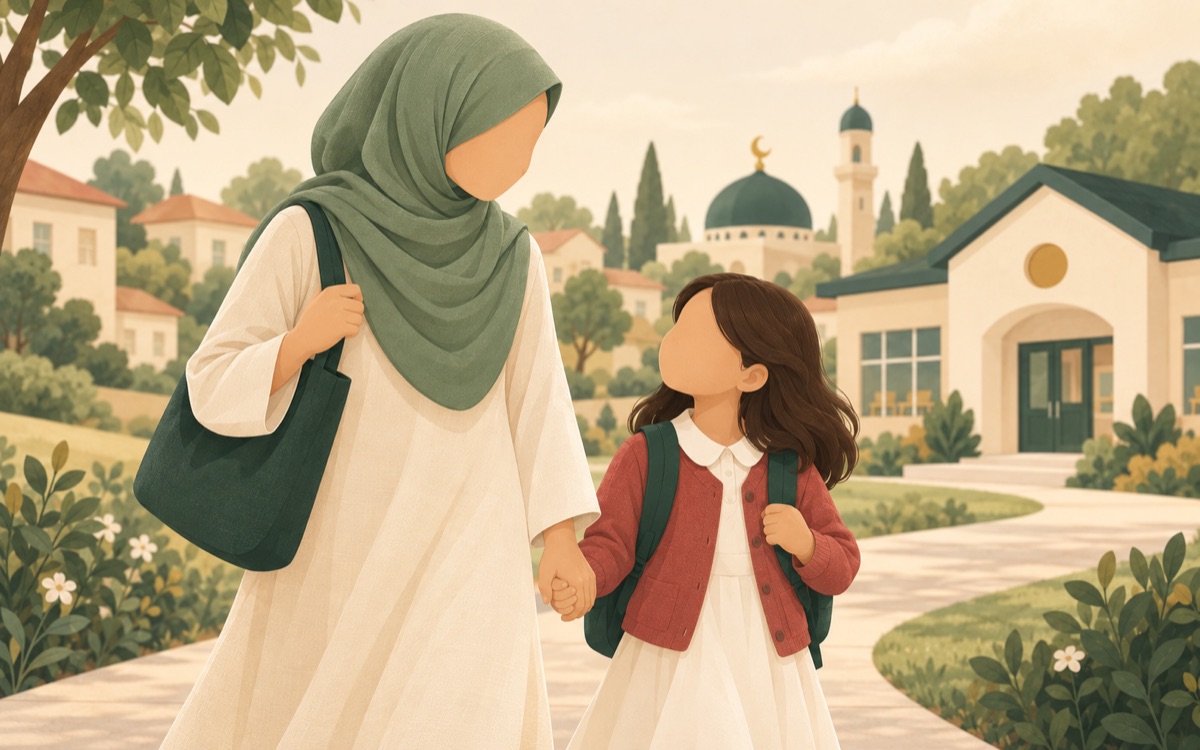
Why do we pray? Why can’t we see Allah? Why does my friend celebrate something different? Children’s questions about Islam can arrive at the dinner table, on the school run, or just as you are saying goodnight.
You do not need a perfect answer ready for every moment. Begin by listening, finding out what your child means, and offering a clear explanation they can understand. When you are unsure, take time to learn rather than guessing.
This guide offers practical conversation ideas for parents. Adapt the examples to your child’s age and understanding, and ask a qualified Islamic teacher about religious questions that need more explanation.
1. Listen Before You Explain
Let your child finish the question before deciding what kind of answer they need. The same words can come from curiosity, something a classmate said, or a worry they have not yet explained.
Try asking, What made you think about that?, or, What have you heard so far? Keep your tone interested rather than making the conversation feel like an interrogation.
For example, Why do I have to pray? might mean they want to understand worship, or it might mean they are struggling to stop a game at prayer time. You can discuss the meaning of prayer and address the practical difficulty separately.
2. Welcome the Question Without Making Assumptions
Thank your child for bringing the question to you. A simple, I am glad you asked, can help you begin without judging what the question means about their faith.
Avoid laughing at an unfamiliar idea, comparing them with siblings, or treating a question as deliberate disrespect. If the wording sounds rude, you can model a respectful way to ask while still addressing the subject.
If the question surprises you, pause before responding. You might say, I want to understand what you mean so I can answer properly. You can take a moment without closing the conversation.
3. Start With One Clear Idea
Match the explanation to what your child is asking now. Younger children may need a short answer with a familiar example; older children may want reasons, sources, and a chance to ask follow-up questions.
Explain words such as worship, mercy, and revelation instead of assuming your child already understands them. Ask which part they would like you to explain again.
Avoid using a long speech to cover every related topic. Answer the question in a few sentences, pause, and let your child show you whether they want to continue.
4. Be Honest When You Do Not Know
Saying, I do not know the answer yet, is a useful starting point when it is true. Add a next step: Let us write that down and ask your teacher.
Choose someone who can explain the issue clearly, understands children, and can identify the sources behind an answer. If you search online, check who produced the material and whether it actually addresses your child’s question.
Return to the conversation after finding help. Explain what you learned in your own clear words and distinguish a reliable religious explanation from an example you have invented to make it easier to discuss.
5. Talk About Allah With Care
If your child asks who Allah is, begin with a basic explanation of Muslim belief: Allah is our Creator, and we worship Him alone. You can introduce a name such as Ar-Rahman and explain that it points to His mercy.
When discussing what Allah is like, avoid drawings or comparisons that suggest He has a human body or resembles something in creation. Surah Ash-Shuraa 42:11 teaches that nothing is comparable to Him.
For questions such as why we cannot see Allah, ask what your child is wondering and seek an explanation from a qualified teacher that suits their understanding. You do not need to improvise a visual description or turn the conversation into an argument.
6. Connect Questions About Worship With Meaning
When your child asks why Muslims pray, you can explain that salah is worship Allah has commanded and a regular time to remember and turn to Him. Surah Ta-Ha 20:14 connects prayer with remembering Allah.
Keep the meaning connected with everyday learning: explain a phrase they recite, practise a movement together, or ask which part of the prayer they want to understand.
If they ask about a rule, separate its religious basis from a practical difficulty. A child who needs help with an Arabic phrase or a rushed schedule may need both an explanation and a change in how they are supported.
7. Discuss Differences Without Putting Other People Down
Children may ask why classmates eat different food, celebrate different holidays, or do not attend a mosque. Explain your family’s beliefs and practices in a direct, respectful way.
You might say, Our family follows Islam, and this is how we practise our faith. Other families have different beliefs. We can explain our choices and still treat people kindly.
If your child asks whether they can join a particular activity, find out what the activity involves before answering. Discuss religious questions with a knowledgeable teacher and practical arrangements with the school or organizer.
8. Respond to Difficult Questions With Compassion
A question about suffering, death, or something frightening in the news may carry an immediate worry. First ask what your child has heard and what is concerning them.
Offer support before a detailed discussion. You can say, That sounds upsetting. Tell me what you are worried about. Do not claim to know the specific divine reason behind a person’s illness, loss, or hardship.
It is possible to discuss Muslim belief in Allah’s wisdom and mercy while acknowledging that we do not know every reason something happens. For a deeper explanation, seek help from a qualified teacher and keep the discussion suited to your child.
A Simple Conversation You Can Adapt
Child: Why do we pray when my friend does not?
Parent: What made you wonder about that today?
Child: They asked why I need to stop playing.
Parent: We are Muslims, and salah is part of how we worship and remember Allah. Your friend’s family may practise differently. You can explain that you need time to pray and ask to continue playing afterwards.
Parent: Were you wondering about why we pray, or would you like help knowing what to say to your friend?
This is an example of a conversation, not a script you must follow. Your child may have a different concern, so leave room for their answer.
What If My Child Keeps Asking the Same Question?
Check which part still feels unclear. You might ask, Is there something in my answer that does not make sense?, or, Are you wondering about a different part now?
Try a shorter explanation or ask a teacher to discuss it with you together. Repetition does not automatically mean your child is refusing to listen.
If the question comes at a busy moment, agree on a specific time to return to it. Follow through so your child knows that postponing a conversation does not mean ignoring it.
What If I Gave an Incorrect Answer?
Return to the topic and correct it clearly: I checked what I told you, and I need to change part of my answer. Explain the correction without making your child responsible for reassuring you.
Show where the corrected explanation came from and invite any remaining questions. Learning together can include revising an answer when you discover it was mistaken.
Keep the Conversation Going
Make small opportunities to talk while reading, walking, or reviewing a lesson. You do not need to turn every family activity into a religious quiz.
At Young Muslim, you can enquire about Islamic studies lessons and discuss your child’s age, current understanding, and the questions you would like a teacher to explore with them.
The goal is a continuing conversation in which your child can ask sincerely, learn from reliable guidance, and understand more over time.
References and Related Reading
The Quran references below support the points about Allah’s uniqueness and remembering Him through prayer. Yaqeen Institute’s parenting resource discusses the importance of addressing questions about faith. The conversation examples in this article are practical suggestions for families.
Quran 42:11: Allah’s uniqueness
Quran 20:14: Prayer and remembrance
Yaqeen Institute: Keys to Prophetic Parenting — Faith