Fun Arabic Games for Kids to Play at Home
Try simple Arabic games for kids at home, from picture matching to treasure hunts, with clear instructions and ways to adapt each game to your child’s level.
Turn Familiar Words Into a Game
Arabic practice can fit into a short game at the kitchen table or a playful search around the room. You do not need a new app or a cupboard full of learning materials to begin.
The Arabic games for kids below use picture cards, paper, and familiar objects. Choose a few words your child has already met, then use a game to give those words a purpose.
The examples use Modern Standard Arabic. If your family uses a spoken dialect, explain which words belong to each variety. Ask your child’s teacher for a clear spoken model when you are unsure of pronunciation.
Before You Start: Pick One Skill
Decide whether the game is about understanding a spoken word, saying a word, recognizing a letter, or reading. These are different tasks, and your child may need different support for each.
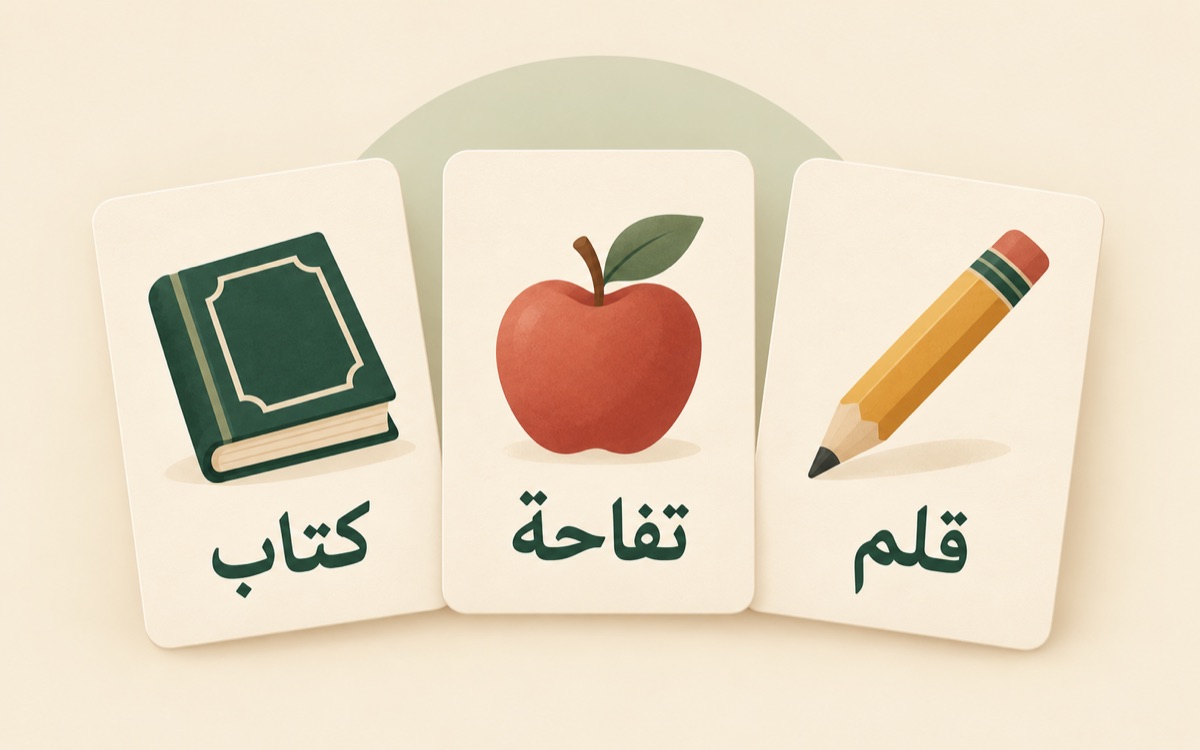
Begin with a small set of familiar vocabulary. For example, use كِتَاب (kitaab, book), قَلَم (qalam, pen or pencil), and تُفَّاحَة (tuffaaha, apple). The English spellings are approximate guides, so pair them with listening.
Show the materials and model one turn before asking your child to play. Keep the first round simple, then adjust if it feels too easy or too difficult.
1. Picture Pairs: Find the Match
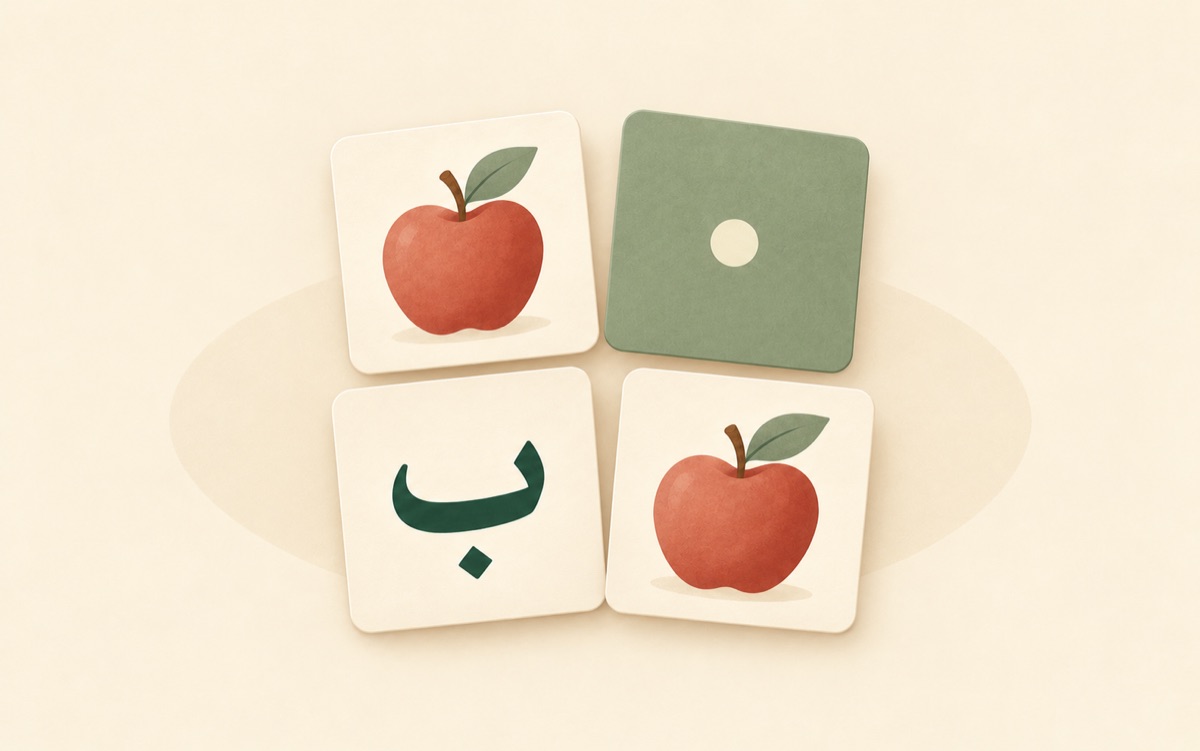
You need: two copies of each of three simple pictures, such as an apple, book, and pencil. Draw the pictures yourself or use suitable cards you already have.
How to play: Start with all six cards face up. Say an Arabic word and invite your child to find the matching pair. Model the word again while pointing to the pictures.
Once the pictures and vocabulary feel familiar, turn the cards face down. Take turns turning over two cards to look for a pair, saying the words together when the pictures appear.
Make it easier: Use only two pairs and keep them face up. Add a reading step: Replace one picture in each pair with its Arabic word, but only if your child is ready to read that word.
What it practises: Matching spoken words with pictures. The face-down version also adds a memory task, so return to face-up cards if remembering positions distracts from the Arabic.
2. Arabic Treasure Hunt: Find an Everyday Object
You need: two or three familiar objects placed where your child can easily reach them. A book, pencil, and chair can give you a starting set.
How to play: Say one Arabic word, such as kitaab, and invite your child to find or point to the object. Say the word again together when they identify it.
Swap roles so your child can give you a word to find. If they are not ready to say it independently, let them choose a picture card while you provide the word.
Make it easier: Keep all the objects visible on a table. Add a challenge: Put them in different familiar places in the same room, without turning the search into a race.
What it practises: Understanding vocabulary beyond a single flashcard and connecting words to real objects.
3. What Is Missing? Notice and Name
You need: three picture cards or small everyday objects with familiar Arabic names.
How to play: Look at the set together and say each word. Ask your child to look away while you remove one item, then invite them to identify what is missing.
They can point to a matching picture, choose between two words you offer, or say the word themselves. Choose the response that suits their current level.
Make it easier: Begin with two items. Add a challenge: Let your child remove an item for you, or change which picture represents a familiar word.
What it practises: Recalling familiar vocabulary. Avoid adding several new words and a memory challenge in the same first round.
4. Letter Hunt: Find the Shape
You need: a sheet with a few large Arabic letters and a separate card showing the target letter. Choose letters your child is already learning.
How to play: Show the target card, name the letter using the model supplied by the teacher, and ask your child to find its match on the sheet.
For example, compare ب and ت once your child has met both. Notice the dot patterns together rather than expecting a quick guess. Start with isolated letter forms before introducing connected forms.
Make it easier: Offer only two large choices. Add a challenge: Find the letter in a word your child knows, with help understanding how its shape changes in context.
What it practises: Visual letter recognition. Finding a letter does not automatically mean your child can read its sound with a vowel mark, so keep those goals separate.
5. Picture Bingo: Listen and Cover
You need: a small grid of four familiar pictures for each player and paper squares to cover them. Use the same vocabulary in a different order on each grid.
How to play: Say one Arabic word clearly. Players cover the matching picture if it appears on their grid. Continue until each picture has been named.
You can play cooperatively by helping each other complete the grids. There is no need to make speed or winning the main goal.
Make it easier: Use a two-picture grid and show a matching card as you speak. Add a challenge: Let your child be the caller for a round.
What it practises: Listening and connecting spoken vocabulary with meaning. Introduce written-word grids later if independent reading is an appropriate goal.
6. Draw and Guess: Make a Word Visible
You need: paper, pencils, and picture prompts for a few familiar words.
How to play: Choose a prompt and draw the object without showing the card. Your child guesses the Arabic word, or selects its picture while you model the word.
Swap roles and let your child draw. A rough sketch is enough; the activity is about communicating a word rather than producing a perfect picture.
Make it easier: Offer two possible answers. Add a challenge: Once a word is familiar, ask a teacher to model a short phrase that can accompany the drawing.
What it practises: Retrieving vocabulary and connecting a word with a new representation of the same object.
How to Choose the Right Game
If your child is new to the words, begin with face-up picture pairs or a visible object hunt. If they understand the words but need help recalling them, try What Is Missing? or Draw and Guess.
For children working on letter recognition, choose Letter Hunt. Use reading versions of the games only when the written words match what they are learning.
Offer a choice between two suitable games. Stop or simplify the round when the rules become more demanding than the Arabic itself.
Can We Play If I Do Not Speak Arabic?
Yes. Ask your child’s teacher for a small word list and reliable spoken examples before you begin. Use the same set across a few games rather than continually searching for new vocabulary.
You can organize cards, take turns, and encourage participation without guessing at unfamiliar sounds. If you notice a pronunciation you are unsure about, ask the teacher to check it.
Learn alongside your child where useful. Make it clear that you are practising too, and avoid asking them to act as the only source of pronunciation guidance.
Keep Feedback Useful and the Game Manageable
When your child chooses the wrong card, point to the correct one and model the word calmly. Give them another chance without making the whole turn depend on getting it perfect.
Notice a specific action: You listened again before choosing, or You spotted the dots on that letter. Let children ask for help and avoid comparing siblings.
Keep rounds brief enough for your child to enjoy. If they prefer a quiet matching task to a movement game, use that preference to choose the next activity.
Make Play Part of a Learning Routine
Choose one game and a small set of words to try first. Revisit the words in ordinary moments, such as finding a book for story time or a pencil for drawing.
Games can support practice between lessons. A teacher can help choose suitable vocabulary, demonstrate pronunciation, and connect play with listening, speaking, and reading goals.
At Young Muslim, you can enquire about Arabic lessons and discuss the activities, starting level, and language goals that suit your child.
Related Arabic Guides
Use the vocabulary guide below to choose a starting word set, and explore which type of Arabic matches your family’s learning goals.
Easy Arabic Words for Kids to Use Every Day
Quranic Arabic vs Modern Standard Arabic: What Should Your Child Learn?