How to Teach Wudu to Kids: A Simple Step-by-Step Guide
Teach wudu through a calm demonstration, clear washing and wiping steps, and guided practice, with parent notes on obligatory acts, sunnah practices, and differences between schools.
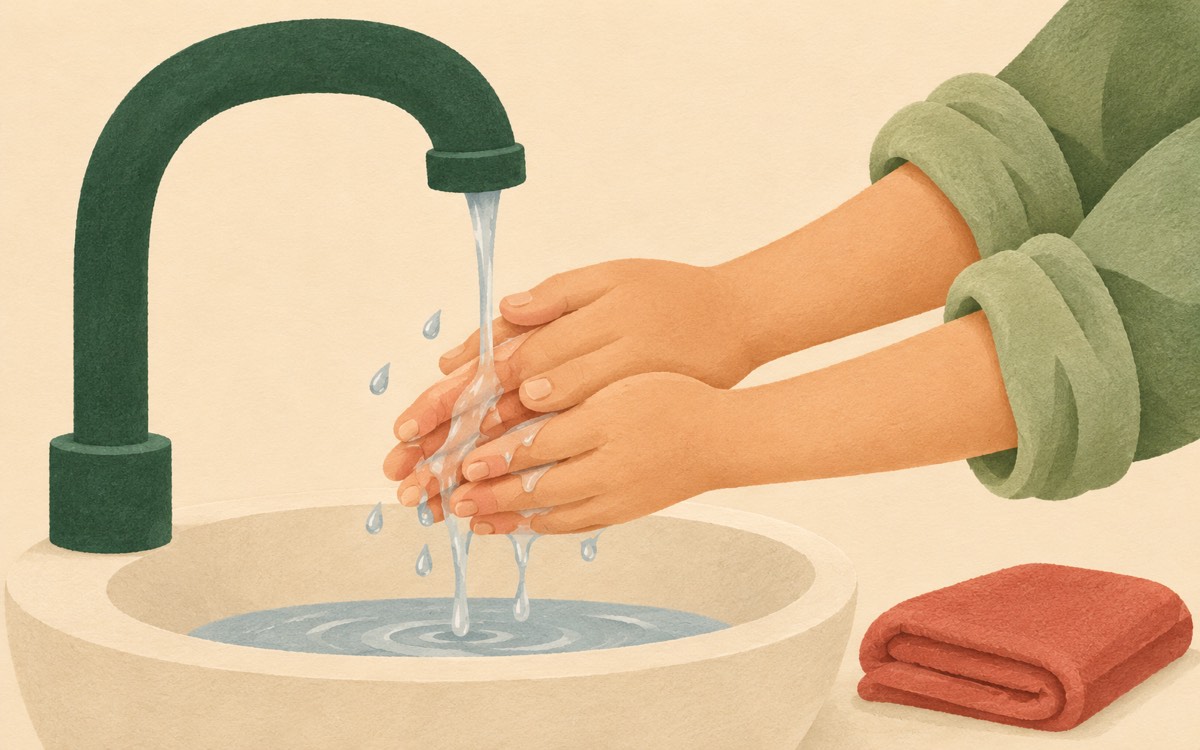
Demonstrate Slowly, Then Let Your Child Practise With You
Teach wudu by showing the sequence slowly, naming each part, and helping your child practise with a small flow of clean water. Explain that wudu is ritual purification for prayer, not just washing visible dirt away.
This guide presents a common Sunni teaching sequence for washing bare feet. It distinguishes core obligations from additional practices and notes important differences among the four Sunni schools. Follow a qualified teacher’s complete method for your family’s school rather than mixing minimum requirements from different approaches.
For Parents: Obligatory Does Not Mean Every Step Has the Same Status
Quran 5:6 sets out washing the face, washing the arms including the elbows, wiping the head, and washing the feet including the ankles. These are core acts in the four Sunni schools, but they are not an exhaustive list of every school’s requirements.
Intention is required in the Maliki, Shafi‘i, and Hanbali schools; the Hanafi school treats it as sunnah for wudu. The schools also differ over order, continuity, rubbing, and the amount of the head that must be wiped. Maliki teaching, for example, includes rubbing and continuity among its obligations.
Give your child one consistent demonstration. If they see another valid method, explain that scholars have recognized differences; avoid telling them that every different-looking wudu is wrong. Diyanet’s High Board of Religious Affairs discusses these distinctions in questions 37–38 of the reference below.
Quran 5:6: purification before prayer
Diyanet: questions 37–38 on intention and differences between schools (PDF, printed page 83)
Set Up a Safe, Unhurried Practice
Check the water temperature, give your child stable footing, and roll sleeves out of the way. An adult should help with balance, especially when washing feet. Keep books and electronic devices away from splashes.
Demonstrate the sequence once without asking your child to copy every movement immediately. Practising a gesture without water can help explain a step, but it does not replace the actual washing or wiping required for wudu.
1. Begin With Intention, Then Wash the Hands
Help your child intend in the heart to perform wudu for worship; no fixed spoken intention formula is required. Say Bismillah at the start. Its legal status differs: the majority regard it as sunnah, while Hanbali teaching requires it when remembered.
Wash both hands to the wrists, including between the fingers, beginning with the right. This initial handwashing is commonly taught three times as a sunnah practice. It does not replace washing the hands again as part of the arms later in the sequence.
Dar Al-Ifta: a demonstrated wudu sequence
Diyanet: school differences concerning the basmalah and wudu (PDF)
2. Rinse the Mouth and Clean the Nose Gently
Show your child how to rinse the mouth with a little water and spit it out. Then gently draw a little water into the nose and expel it, using the teacher’s demonstration. Do not encourage forceful sniffing or swallowing the rinse water.
Mouth and nose rinsing are sunnah in the Hanafi, Maliki, and Shafi‘i schools and required in Hanbali wudu. They should not be described as optional in every school. Repeating the rinses three times is part of the fuller method described in Sahih al-Bukhari 185.
3. Wash the Whole Face
Wash from the usual hairline to the chin and across the face from ear to ear. Help your child move water over the whole area rather than only splashing the middle. Soap is not a condition of wudu.
A complete wash is required; washing three times is a sunnah practice, not a reason to say that one complete wash never counts. Sahih al-Bukhari 157 reports washing once, while 159 describes washing parts three times. Use those reports to distinguish completeness from repetition.
4. Wash the Hands and Arms, Including the Elbows
Wash the right hand and arm through the elbow, then the left. Include the fingers, backs of the hands, and the elbows themselves. Check that sleeves have not blocked the water.
Use a simple cue: ‘Hand, arm, elbow.’ Starting on the right and repeating the complete washes three times are part of the fuller sunnah method; do not let counting distract from reaching the whole required area.
5. Wipe the Head and Ears
With wet hands, demonstrate wiping over the head from front to back and back to the starting point. Sahih al-Bukhari 185 describes this movement. This is wiping with wet hands, not pouring water over the head.
Then show gentle wiping of the ears, including behind them, without pushing fingers deep into the ear canals. The amount of head wiping required and the legal status of ear wiping differ among schools; the parent reference below discusses those differences. A common beginner demonstration wipes the whole head once and includes the ears.
Sahih al-Bukhari 185: the head-wiping movement
Dorar: obligations of wudu and differences concerning head and ear wiping
6. Wash the Feet, Including the Ankles
Help your child wash the right foot and then the left, including the ankles, heels, and between the toes. Keep them stable rather than asking them to balance on one wet foot. Use enough water to wash the whole area without leaving the tap running unnecessarily.
Washing three times is part of the fuller sunnah method; the aim is a complete wash, not a race. This guide does not cover wiping over socks or footwear, which has separate conditions to learn with a teacher.
Practise the Sequence Without Creating Anxiety
Keep the steps connected, following your teacher’s guidance on continuity. Let your child say what comes next and gradually reduce prompts. If you notice a missed area, point to it calmly; ask the teacher how to correct an omission under your school rather than automatically restarting everything.
Praise a specific action such as checking the elbows or using a gentle water flow. Sahih al-Bukhari 201 describes the Prophet’s economical use of water for wudu; it need not become a volume-measuring exercise for a child.
For the next stage, use our salah guide to connect preparation with prayer. If you need guided Islamic learning, explore our classes and ask about an appropriate starting point.
Sahih al-Bukhari 201: water used for wudu