Islamic Manners for Kids: Everyday Habits to Practise at Home
Practise salam, permission, honesty, and gentleness through everyday family situations, with clear examples, calm correction, and accurately linked Islamic sources.
Teach One Everyday Habit Where Your Child Can Use It
Teach Islamic manners through small actions your child can practise in real situations: greet them warmly, show how to ask permission, respond calmly to the truth, and model gentle words when something goes wrong. Choose one habit to work on rather than giving a long lecture about being good.
The activities below are family teaching suggestions linked to relevant Quran and authentic hadith references. They are examples of applying a principle, not additional sayings attributed to the Prophet.
1. Make Salam a Welcome, Not a Performance
When your child comes home, greet them with As-salaamu ‘alaykum and model Wa ‘alaykum as-salaam in reply. Explain the meaning as a greeting of peace. Let them practise with you or a sibling before expecting an easy response in a busy gathering.
Quran 4:86 teaches responding to a greeting with one equal or better. In Sahih al-Bukhari 6247, Anas describes greeting children and says that the Prophet used to do so. Start by offering the greeting yourself rather than waiting for children to initiate it.
If a child is shy, give them time and a quiet reminder instead of making everyone watch them. Adults can still make the greeting feel welcoming.
2. Practise Asking Permission and Waiting for an Answer
Before visiting someone, rehearse knocking or ringing once, standing back, and waiting for permission to enter. Quran 24:27 instructs believers to seek permission and greet the occupants before entering other people’s homes.
At home, practise the same respect for privacy with a closed bedroom door: ‘May I come in?’ Pause for the reply. Tell your child that asking is not the same as receiving permission.
You can also apply respect for others’ belongings by asking, ‘May I use your pencil?’ and accepting ‘not now.’ Explain that this is a related family application; the cited verse is specifically about entering homes.
Model it both ways. Knock on your child’s closed door when appropriate, and ask before taking something they are using.
3. Make Telling the Truth Safer Than Hiding a Mistake
If a drink is spilled, ask what happened without supplying an accusation. If your child tells you, respond: ‘Thank you for telling me. Let’s get a cloth.’ You can still address carelessness, but begin by separating the honest account from the action that needs repair.
Sahih al-Bukhari 6094 connects truthfulness with righteousness and warns against lying. Teach that principle without labelling a child ‘a liar’ after one incident or using the hadith to frighten them into a confession.
When you make a mistake, model a truthful repair: ‘I said I had packed it, but I forgot. I’ll get it now.’ Avoid asking children to give false excuses on an adult’s behalf.
4. Show What Gentleness Looks Like During Disagreement
When two children want the same toy, help them stop grabbing and name the problem: ‘You both want a turn.’ Offer words they can use, such as ‘Can I have a turn when you finish?’ Then support an actual plan for sharing or waiting.
Sahih Muslim 2594a praises gentleness. Apply that principle to your own tone as well as your child’s. A calm instruction followed by help is easier to practise than being told to be kind while an adult shouts.
Gentleness does not mean accepting harm. Teach a clear ‘Stop,’ moving away from unsafe behaviour, and asking a trusted adult for help. Practise respecting another child’s refusal as well.
5. Turn an Apology Into a Small Repair
After everyone is calm, help your child identify what happened and what might put it right. A knocked-over construction might need rebuilding; a borrowed object might need returning.
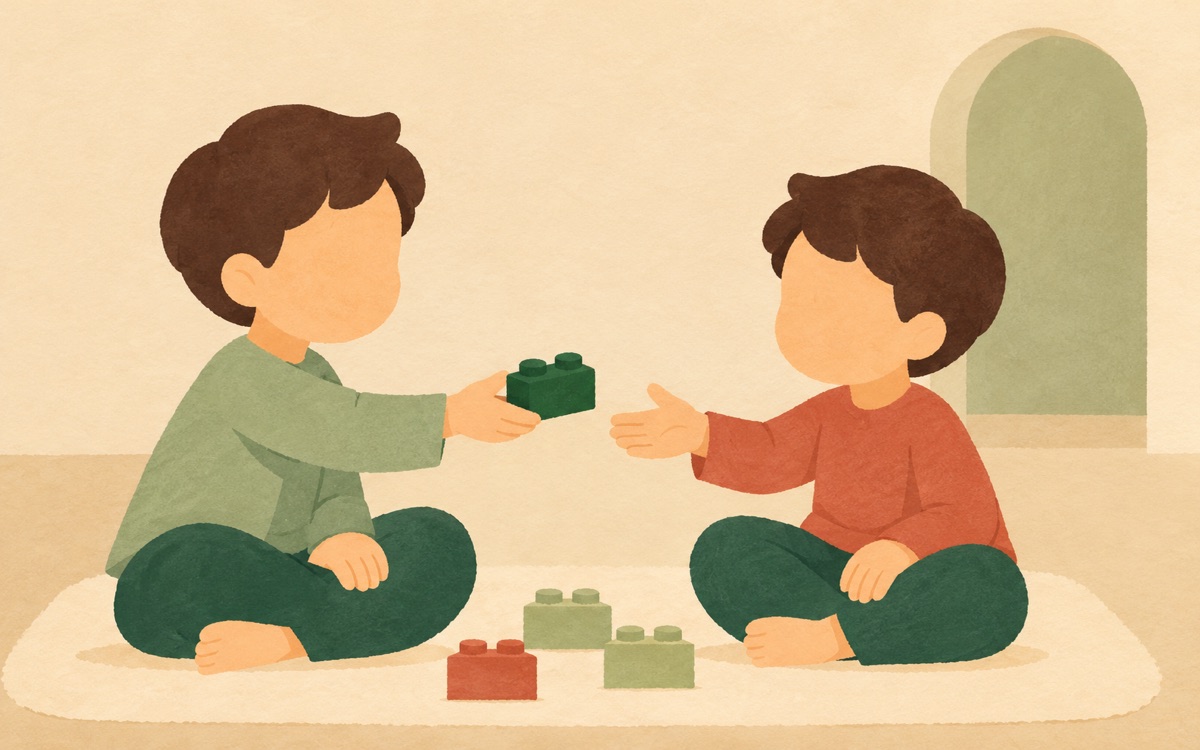
Model a specific apology: ‘I took the block you were using. I’m sorry. Here it is.’ Do not require a hug or immediate forgiveness from the other child. An apology is a chance to take responsibility, not a way to end someone else’s feelings on demand.
These are practical ways to apply honesty and gentleness at home, not a fixed religious apology formula. Keep the repair realistic and related to the situation.
Choose One Habit and Notice It in Everyday Life
Pick one situation that happens regularly. For permission, practise before entering a room. For salam, begin with your own greeting at the door. For honesty, rehearse what to say when something breaks.
Give feedback about the action: ‘You waited for an answer before going in.’ If it goes wrong, model the words again and offer another chance. Avoid comparing children or treating every quiet response as disrespect.
A child’s language skills, tiredness, and comfort in a setting can affect what they can show you. Simplify the prompt or use a gesture when needed while keeping the principle clear.
Connect Manners With Your Wider Family Learning
Use a short conversation about what happened today instead of testing a list of definitions. Ask, ‘When did we need permission?’ or ‘What could we say more gently next time?’
Our guide to children’s questions about Islam can help keep those conversations open. For a broader learning plan, explore our classes and discuss the Islamic learning topics your family wants support with.
How to Answer Your Child’s Questions About Islam