Tajweed for Kids: What Beginners Should Learn First
New to tajweed for kids? Explore the first reading and pronunciation skills to practise, how lessons work, and ways parents can help at home.
Begin With Clear Recitation, Not a List of Rules
You want your child to recite Quran correctly, but words such as makharij, madd, and ghunnah may feel unfamiliar. Should a beginner memorize these terms before reading? And how much should you correct at home?
Tajweed concerns giving Arabic letters their proper pronunciation and applying the rules of Quran recitation.
For a child, the starting point can be practical: listening to a clear model, trying a manageable example, and receiving patient feedback.
The sequence below is a suggested guide for parents, not a fixed syllabus. A qualified teacher should adapt it to your child’s reading level and learning needs.
1. Check the Reading Foundations
Before choosing a tajweed course, ask the teacher to assess your child’s current reading.
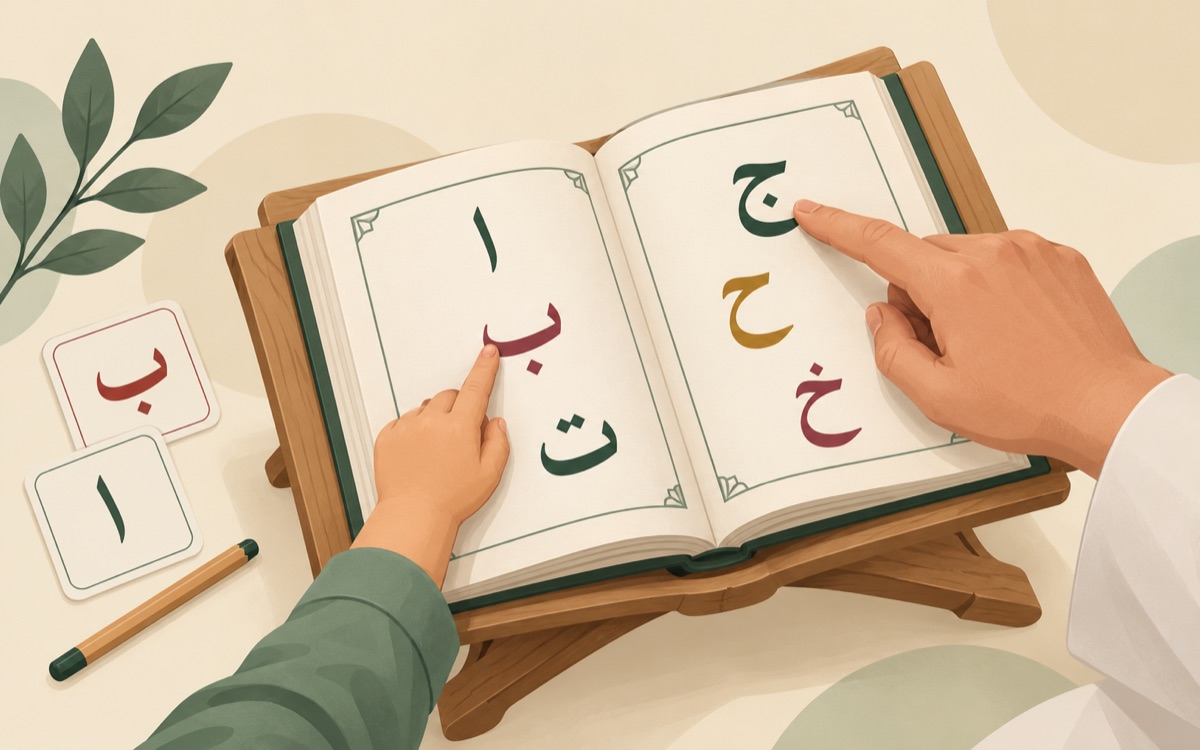
Can they recognize Arabic letters in different positions? Notice vowel marks? Read an unfamiliar combination rather than repeat a line from memory?
A beginner may need reading instruction alongside pronunciation practice. A child who already reads confidently may need a different starting point.
A primer such as Noorani Qaida can support foundational learning, but completing a book should not be treated as proof that every reading skill is secure.
2. Learn to Hear and Produce Letter Sounds
An important part of tajweed is distinguishing letters and learning how their sounds are produced.
Makharij refers to the articulation points of letters. A teacher can model a sound and guide the child towards the appropriate use of the tongue, lips, or throat.
Some Arabic sounds do not have an exact English equivalent. English spelling or transliteration alone cannot show a child precisely how to pronounce them.
Practise a small selection chosen by the teacher rather than trying to correct every sound at once. Learning the terminology can accompany practice without becoming the only goal.
3. Read Short Vowel Marks Carefully
The short vowel marks fatha, kasra, and damma guide how a letter is read. Beginners need opportunities to notice the mark and connect it with the sound.
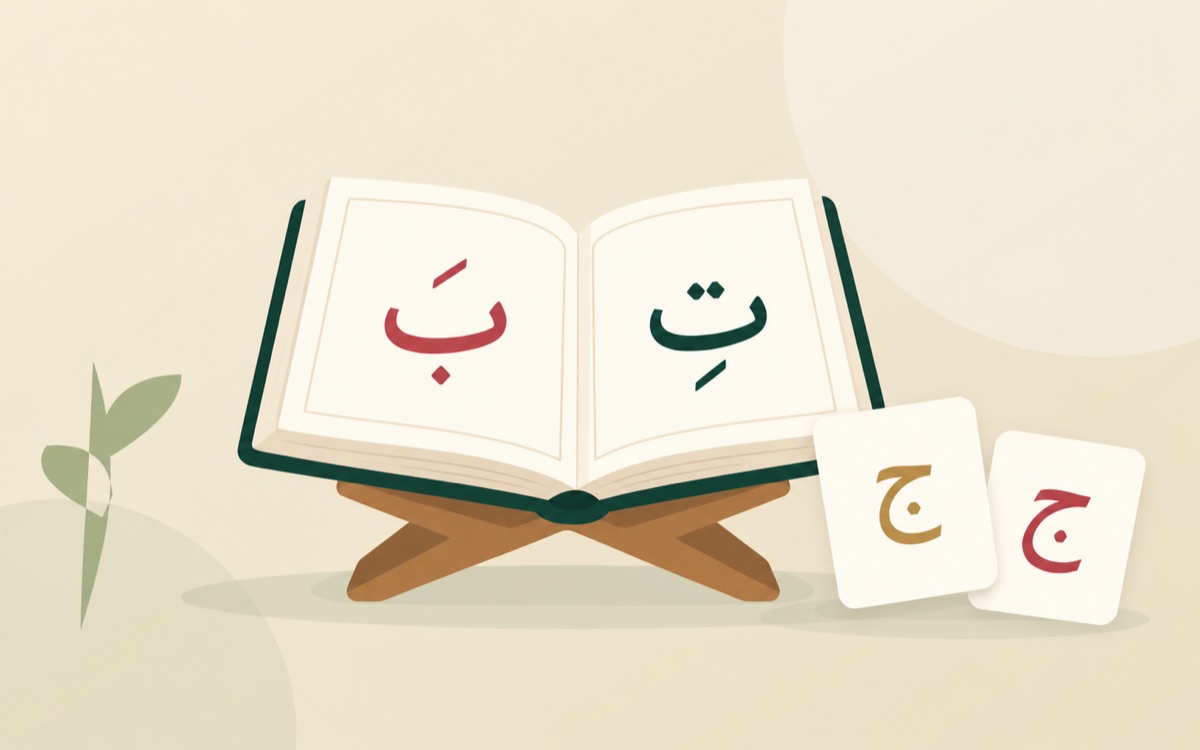
For example, بَ, بِ, and بُ use the same letter with different short vowels. Ask the teacher to model these sounds rather than relying on an English approximation.
A useful practice activity is reading a few examples in a different order. This helps the teacher check whether the child is following the written marks or remembering a familiar sequence.
Keep the task small and give your child time to look before answering.
4. Understand Sukoon and Shaddah Through Examples
Sukoon indicates that a consonant does not carry a short vowel of its own. Shaddah indicates a doubled consonant.
Recognizing these marks matters because they change how a written example is read.
Ask the teacher to demonstrate the difference using suitable examples and to check your child’s attempt.
Avoid adding an extra vowel simply to make a consonant easier to say. If you are unsure what you hear, note the example and ask the teacher instead of guessing at a correction.
5. Introduce Lengthened Sounds Gradually
Madd refers to lengthening certain sounds in recitation. Beginners need to hear the difference between a short vowel and a lengthened sound.
Start with examples appropriate to the learner’s level. The teacher can explain when lengthening applies and model its duration.
Different types of madd have different conditions. A parent should not assume that every elongated sound follows the same rule.
There is no need to introduce every category at once. Focus on applying the examples currently being taught.
6. Build Further Rules Into Guided Reading
As your child develops a stronger reading foundation, the teacher can introduce further topics such as ghunnah, qalqalah, and the rules associated with noon sakinah, tanween, and meem sakinah.
The order and depth should follow the learning plan. A teacher may model a feature in practice before expecting the child to explain its technical name.
Ask which rule your child is currently practising and what a successful attempt should sound like.
Colour-coded text can provide a visual reminder, but colours do not replace understanding the rule or receiving feedback on recitation.
What Should a Beginner Tajweed Lesson Include?
Look for clear modelling, opportunities for the child to recite, and specific feedback they can act on.
A manageable lesson might revisit a familiar example, introduce one point, and practise it in a short passage.
Ask how the teacher checks that a skill carries over to another example. Reciting one memorized line correctly is not the same as applying the skill independently.
Mistakes should be handled patiently. Feedback should help the child understand what to try next without making them afraid to read aloud.
How Can Parents Help Without Knowing Tajweed?
You can support the routine without becoming your child’s pronunciation teacher.
Ask for a clear practice task and an audio model recommended by the teacher. Listen together and encourage your child to attempt the assigned examples.
If a sound or rule is unclear, write down the question and return to it in the next lesson.
Avoid playing several different teaching resources for the same task without checking how they fit the course. Different explanations, notation, or recitation approaches can confuse a beginner.
A Simple Home Practice Routine
Begin by revisiting something your child has already learned.
Listen to the teacher’s model, then practise a small number of assigned examples. Give your child time to respond rather than rushing them.
Notice a specific effort, such as checking a vowel mark or trying a difficult sound again.
Finish with any questions you want to share with the teacher. Adjust the amount of practice to your child’s needs rather than aiming for a fixed number of pages.
Should My Child Learn Tajweed Before Memorizing Quran?
Accurate pronunciation should receive attention during memorization, but a child does not need to finish every theoretical tajweed topic before learning any passage.
Ask the teacher to balance reading, listening, memorization, and revision at a suitable level.
Use a reliable model and seek feedback so that memorization is supported by careful recitation.
Understanding the meaning of what is being learned also deserves a place alongside pronunciation and memorization.
Can Children Learn Tajweed Online?
Online lessons are one option when the teacher can hear the child clearly and provide appropriate guidance.
Check the microphone, connection, and learning materials before the lesson. Poor audio can make it harder to judge pronunciation.
Ask about the teacher’s qualifications, experience with children, safeguarding arrangements, parental observation, and progress updates.
If your child struggles with the format, discuss adjustments or suitable alternatives rather than assuming they cannot learn.
How Will You Know Your Child Is Making Progress?
Look beyond the number of rules they can name.
Progress might include noticing a reading mark independently, distinguishing sounds more consistently, or applying feedback to a new example.
Ask the teacher what has improved, what still needs support, and which practice task would be most useful next.
There is no single completion timetable for every learner. Avoid promises of perfect recitation after a fixed number of lessons.
Take the Next Step With Clear Guidance
A useful beginning combines reading foundations, careful listening, guided pronunciation, and practice your child can manage.
Choose a teacher who can explain the learning plan and keep home practice focused.
At Young Muslim, you can enquire about Quran lessons and discuss your child’s reading level, pronunciation goals, and support needs.