What Age Should Your Child Start Learning Quran?
Wondering when your child should start learning Quran? Explore readiness, early learning activities, and practical tips for choosing suitable lessons.
There Is No Single Starting Age for Every Child
You may hear that children should begin Quran lessons at four, five, or six. Other parents may tell you that their child started even earlier. It is understandable to wonder whether your own child is ready—or whether you have waited too long.
There is no single starting age that suits every child or every type of Quran learning. Listening together, exploring Arabic letters, learning to read, and following a structured memorization programme are different activities.
A useful question is not only “How old is my child?” but also “What kind of learning would suit them now, and what support would help?”
This guide offers practical suggestions for parents. It does not set a religious requirement, a developmental deadline, or an age-based test.
First, Decide What You Mean by Starting
A child can become familiar with Quran recitation through family life before beginning formal lessons.
Listening while a parent recites, asking about a Quran on the shelf, or joining in with a familiar passage can all be opportunities for connection.
Structured reading lessons involve different demands: looking at written letters, responding to a teacher, and practising particular sounds or reading patterns.
Before choosing a course, decide whether your immediate goal is familiarity, beginner reading, pronunciation support, memorization, or understanding. A teacher can help you choose a manageable starting point.
For Younger Children, Keep Learning Simple and Shared
For a younger child, begin with short, shared activities rather than assuming they need a formal lesson.
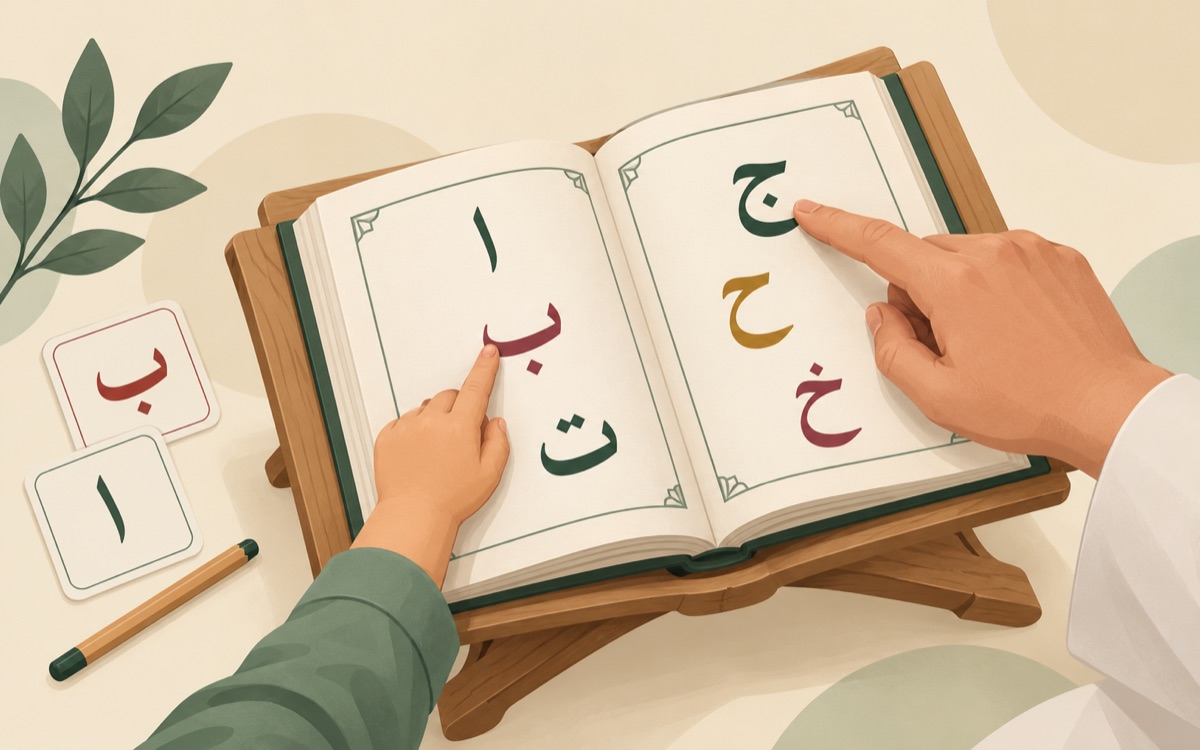
You might recite together, look at one Arabic letter, or talk about when your family reads Quran. Follow their interest and allow the activity to end without pressure.
Avoid treating an early ability to repeat a passage as proof that a child is ready for long lessons or demanding memorization targets.
You can build familiarity without relying on a screen. Reading and listening with a parent are options alongside any teaching programme you may consider later.
What Can Help You Choose a Suitable Lesson?
Notice how your child responds to a brief activity with support. Do they show interest in sounds, letters, or familiar recitation? What helps them participate?
Consider how they communicate, whether through speech, gestures, or another method, and how a teacher could respond to their needs.
Being able to sit still for a fixed number of minutes should not be the only measure. Movement breaks, visual materials, a shorter session, or a parent nearby may make participation easier.
These observations should help shape the lesson, not become a checklist that excludes a child from learning.
Ask the Teacher to Adapt the Starting Point
Tell the teacher about your child’s previous exposure to Arabic and Quran learning, their interests, and any support that helps them learn comfortably.
A starting assessment can help identify what they already recognize and which skills need attention. It should guide teaching rather than label the child as ahead or behind.
Ask how the teacher introduces unfamiliar sounds, handles mistakes, and adjusts activities when a learner becomes tired or frustrated.
A suitable lesson is a partnership: the child receives support, the teacher adapts their approach, and the parent shares useful observations.
Does My Child Need to Speak Arabic First?
Speaking conversational Arabic is not a prerequisite for beginning Arabic letter recognition and guided Quran reading.
However, reading aloud and understanding meaning are different skills. Discuss both with the teacher so that your child’s learning does not focus only on producing sounds.
If you do not speak Arabic yourself, ask for clear explanations in a language you understand and specific guidance for home practice.
You can organize the routine and encourage your child without guessing at pronunciation corrections.
Is My Child Too Old to Start?
If your child is older and has not started reading Quran, their age alone is not a reason to avoid beginning.
Start with what they can currently do. They may recognize some letters, remember passages through listening, or be completely new to the script.
Choose materials and explanations that respect their age. An older beginner may appreciate knowing why they are practising a particular skill and how it connects with their goals.
Avoid comparisons with younger siblings or classmates. A private conversation about what they would like to learn can be a more helpful beginning.
When Are Online Quran Classes a Suitable Option?
Online lessons are one option, but suitability depends on the child, the teaching approach, and the support available at home.
Check whether your child can see the learning material clearly and hear the teacher comfortably. Ask whether a parent should remain nearby and how breaks or technical problems are handled.
Before booking, ask about safeguarding, parental observation, lesson length, and the teacher’s experience with children of a similar age and language background.
If an online format does not suit your child, discuss alternatives such as a different session length, a different teaching approach, or suitable in-person lessons.
How Long Should Home Practice Last?
There is no single practice length that every child should follow.
Agree on a small, clear task with the teacher. It might involve revisiting a few letters or practising a short passage that has already been explained.
Choose a comfortable time and watch how your child responds. Shorten or pause the activity when needed instead of measuring success only by minutes completed.
Regular opportunities to practise can be useful, but a missed day does not need to become a punishment or a long catch-up session.
Should Reading or Memorization Come First?
Ask the teacher to recommend a balance based on your child’s current skills and your family’s goals.
Listening and memorization can accompany reading instruction. However, remembering a passage does not automatically mean a child can read its written words independently.
Include appropriate explanations of meaning alongside recitation, and make time for questions.
Avoid choosing an intensive memorization target only because another child has achieved it. Discuss the support, revision, and workload involved before committing.
What If My Child Finds Lessons Difficult?
First, explore what is making participation difficult. The session may be too long, the instructions unclear, the material unfamiliar, or the time of day unsuitable.
Talk with the teacher about changing one part of the lesson and observing the response. Difficulty with one format does not mean your child cannot learn.
If your child has communication, sensory, attention, or other learning needs, share the support that works for them and ask what adaptations the provider can offer.
Look for progress in confidence, participation, recognition, and understanding—not only completed pages or memorized passages.
Choose a Supported Beginning, Not a Race
The best starting plan is one that takes your child’s current needs seriously and provides teaching they can engage with.
Begin with a clear goal, an adaptable teacher, and a manageable routine. Review the plan as you learn what helps your child.
At Young Muslim, you can enquire about Quran learning and discuss your child’s age, starting level, and support needs before choosing a suitable class.