How to Teach Kids the Arabic Alphabet at Home
Help your child learn Arabic letters at home with a practical sequence for shapes, sounds, dots, vowel marks, and connected forms, plus a short sample lesson.
Start With One Letter Your Child Can Recognize and Use
Your child may be able to sing an Arabic alphabet song but still hesitate when you point to a letter on its own. A useful next step is to help them connect a written shape with its name and sound, without relying on the song’s order.
This guide gives you a home practice sequence, from choosing a small starting set to noticing letters inside words. You need paper, a pencil, and a clear spoken model from a teacher or the learning resource your child already uses. Work alongside their lessons if they have a teacher; there is no need to introduce a competing sequence.
1. Check What Your Child Already Recognizes
Show two or three large letters separately. Ask, ‘Can you point to baa?’ Then change the positions and ask again. If your child knows the letter’s name, invite them to say it too. Pointing and naming give you different information, so note which task they can do independently.
If everything is unfamiliar, introduce just one letter and model the answer. If your child recognizes isolated letters easily, check a familiar letter inside a printed word before repeating beginner work. Keep this a brief conversation rather than a scored test.
Choose one clear print style for your first cards. Decorative calligraphy and small text can wait until your child is comfortable with the basic shapes.
2. Pair the Letter’s Shape With a Spoken Model
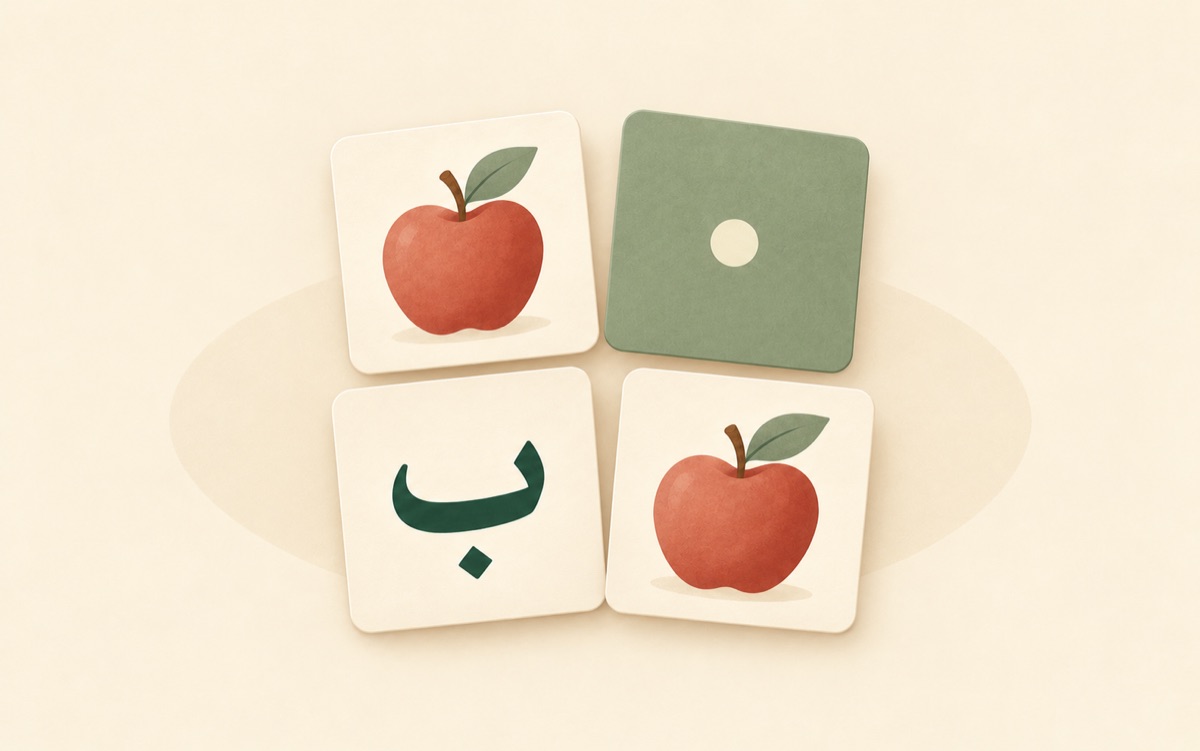
Write ب on a card and name it baa. Let your child look, listen, and point to the same letter on a second card. Then mix it with one other letter they have already met. Move the cards around so their answer depends on the shape rather than its position.
Separate the letter’s name from reading it with a vowel: baa is the name of ب, while بَ is read ba. English spellings here are approximate prompts, not a substitute for hearing Arabic pronunciation. Use the same spoken model across your cards and lessons.
An alphabet song can help children become familiar with the names and order. Follow it with a small recognition task so you can see whether they recognize a letter outside the song. Add another letter when the current task feels manageable, rather than aiming for a fixed number each day.
3. Make the Dots Part of the Letter
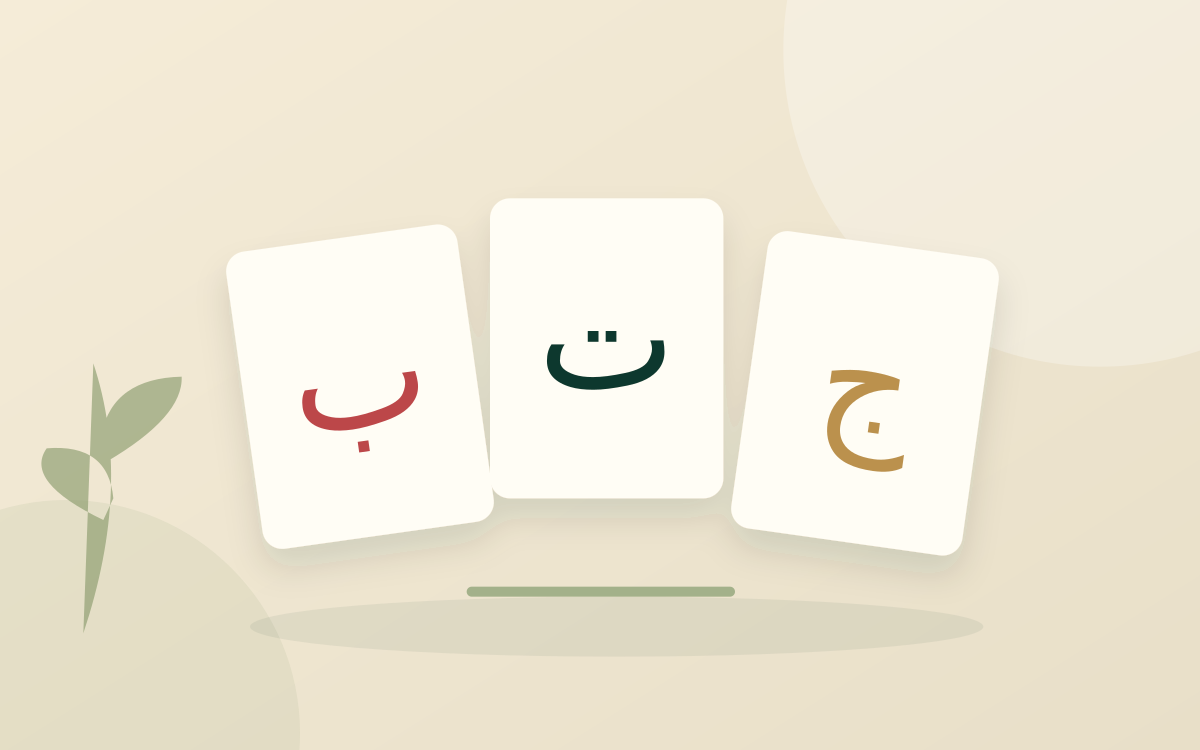
Once your child has met ب and ت, compare them side by side. Baa has one dot below; taa has two dots above. Later, add ث, thaa, with three dots above. These letters share a basic body shape, but their dots distinguish them.
Ask your child to describe what they notice before naming the letter. If they confuse ب and ت, say, ‘Let’s look under the shape. There is one dot, so this is baa.’ Show the correct card and let them try again.
Avoid introducing every similar-looking letter in one sitting. If a pair keeps getting mixed up, reduce the choices and revisit each letter with its spoken model before comparing them again.
4. Introduce Short Vowels With a Familiar Letter
When your child recognizes a letter, use it to introduce one short vowel mark at a time. With baa, بَ is ba, بِ is bi, and بُ is bu. Fatḥah is the mark above, kasrah is below, and ḍammah is above. Listen to each example before asking your child to read it.
Begin with one marked form, then compare two when your child is ready. Point to the vowel mark as you read, so the task is about noticing the print rather than guessing which sound comes next.
A vowel mark is not another alphabet letter. Keep these first examples focused on short vowels; long vowels and further reading rules can follow the sequence used by your child’s teacher.
5. Show How a Letter Looks Inside a Word
Arabic words are read from right to left, and many letters join to their neighbours. A familiar letter can therefore look different inside a word. Introduce this connection before expecting a child to read from isolated-letter cards alone.
For example, show ب on its own, then point to baa at the right-hand beginning of بَاب (baab, door). Show its final form at the left-hand end of the same word. Explain that both are baa, even though their surrounding connections differ. Model the whole word yourself; your child’s task can simply be to identify the letter.
Not every letter joins in both directions. In بَاب, alif does not connect to the baa that follows it in reading order. Use a teacher’s printed examples to introduce joining patterns gradually instead of asking your child to invent connections.
If the word feels too busy, cover the surrounding letters and reveal them again while keeping attention on the target. Recognizing a connected form is a useful step even when independent word reading is still ahead.
6. Add Writing Without Making It the Only Test
Show how to form one large letter using the model in your child’s workbook or teacher’s materials. Let them trace it with a finger, copy it once, and compare the shape and dots with the model. A few careful attempts are more useful for this task than a page copied without attention.
Keep recognition and handwriting separate when deciding what to practise next. A child who points to the correct letter but struggles to copy it can continue learning through pointing and spoken responses while getting support with writing.
Use feedback about what is visible: ‘You added the dot below,’ or ‘Let’s check where this line begins.’ If writing becomes frustrating, stop the copying task and return to a letter your child can identify confidently.
A Short Home Lesson You Can Adapt
Here is a possible five-to-ten-minute session for a child who has already met baa and taa. Treat the timing as an example, not a requirement; shorten the session if your child needs a break.
Review: Show ب and ت in a mixed order. Name one and ask your child to point, then invite them to name a card without your prompt.
Teach one step: Show بَ and play or model ba. Point out the fatḥah. Let your child listen again and try the sound without adding two more vowel marks immediately.
Check and finish: Mix بَ with another marked form they already know, if there is one. Otherwise, return to identifying baa and let them trace it once. Write a brief note about what they did independently and what needed a prompt.
At the next session, revisit that note before adding material. If your child recognized the letter only after you named it, repeat that step with less help rather than assuming it is secure.
How to Tell What Needs More Practice
If your child knows the alphabet in order but not on separate cards, practise a small mixed set. If they confuse similar shapes, compare the dots. If they recognize a letter but change the vowel sound, return to one familiar letter with two marked forms. Choose the next task from the difficulty you actually see.
Check a familiar example again on another day and in a different position on the page. Keep a simple note such as ‘Recognizes baa without help; needs a reminder to look at the kasrah.’ This gives you and the teacher a clearer starting point than counting completed worksheets.
There is no need to promise a date for finishing the alphabet. Move forward when your child can use what they have met with less support, and keep earlier letters in the review.
If You Do Not Read Arabic Yourself
You can prepare the cards, follow a teacher’s examples, and notice whether your child responds independently. Ask for a short recording that matches the exact letters and vowel marks you are practising. Avoid guessing unfamiliar sounds from English spellings.
If pronunciation or connected forms leave you unsure what to teach next, explore Young Muslim’s Arabic classes and discuss your child’s current level and the home practice you can support. Bring a specific example of where they get stuck so the conversation has a useful starting point.
Use Games and Vocabulary for the Next Kind of Practice
Once you know which letters need review, our Arabic games guide offers activities you can adapt to that small set. The everyday words guide serves a different purpose: connecting familiar spoken words with meaning. Neither needs to replace a clear sequence for learning the script.